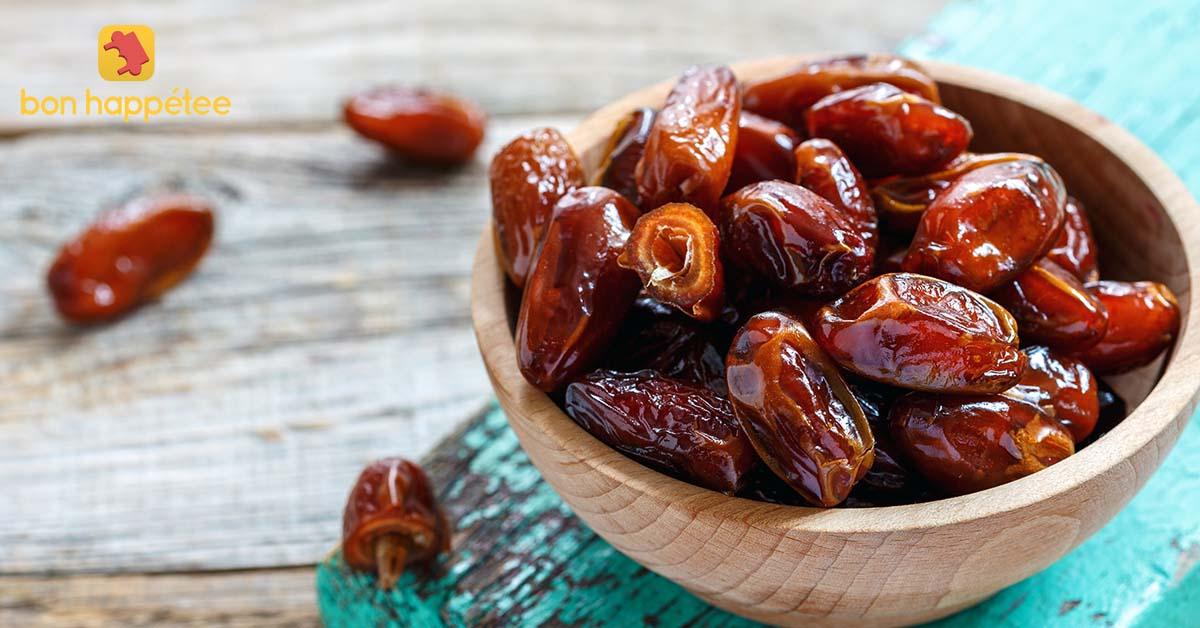
Dates.
Also known as: Khajur.
Also known as: “That thing” everyone thinks is healthy but isn’t.
And in some parts of North India, “Khajur” is even slang for stupid.
Coincidence? You decide. 🙃
The Rise of “Khajur Wali Mithai”
We’re living in the golden age of sugar-free marketing.
Every other sweet today is proudly labeled:
“Sweetened with Dates”
“No Added Sugar”
“All Natural”
It sounds healthier.
It feels guilt-free.
But here’s the kicker:
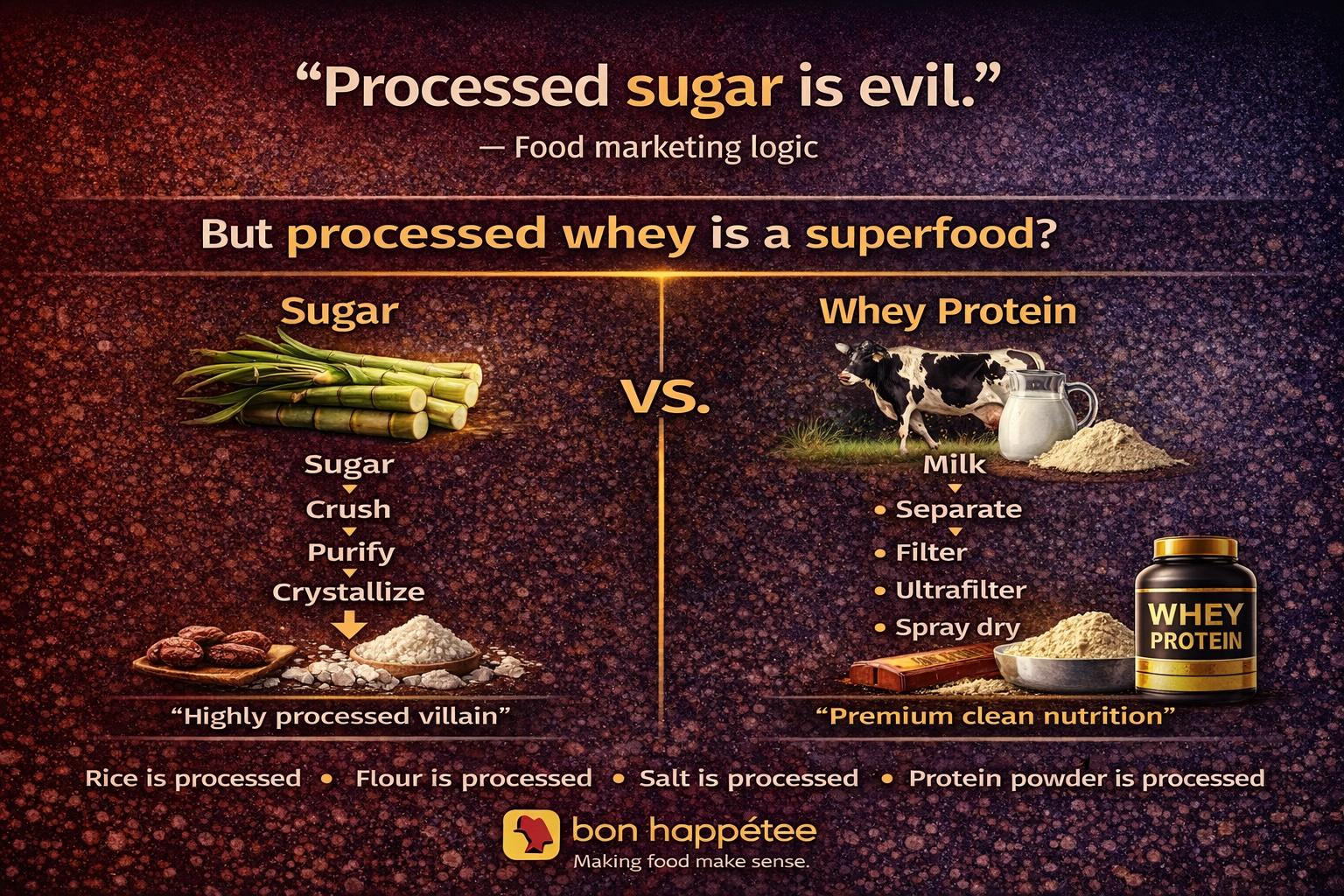
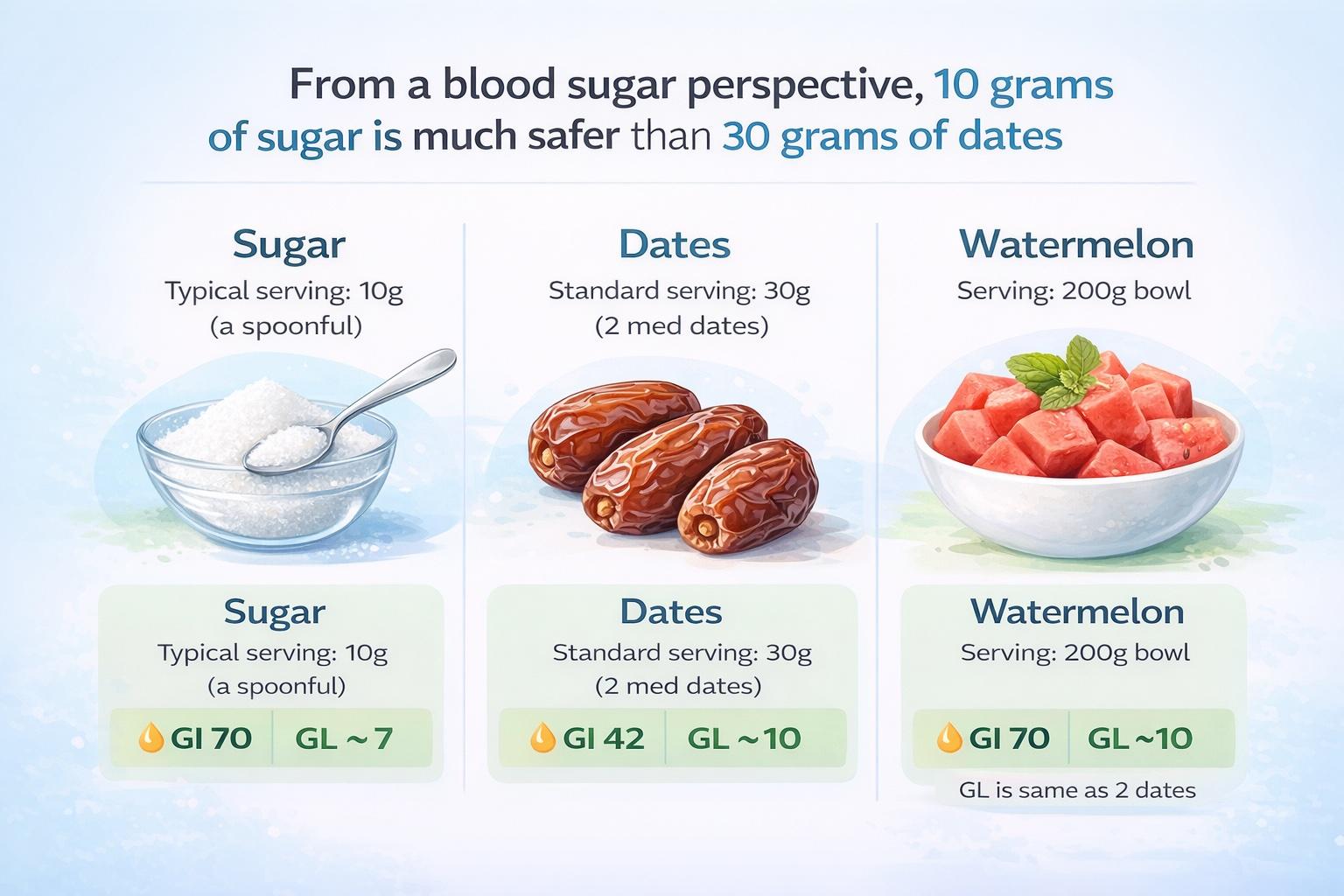
Dates are sugar.
Yes, natural. But still sugar. Still calories. Still carbs.
What Does the Science Say?
Dates contain:
- ~60–65% natural sugar by weight
- ~280 kcal per 100g
- Very low water content = very high energy density
- Negligible protein or fat
- A bit of fiber and a few minerals—but not enough to offset the sugar bomb
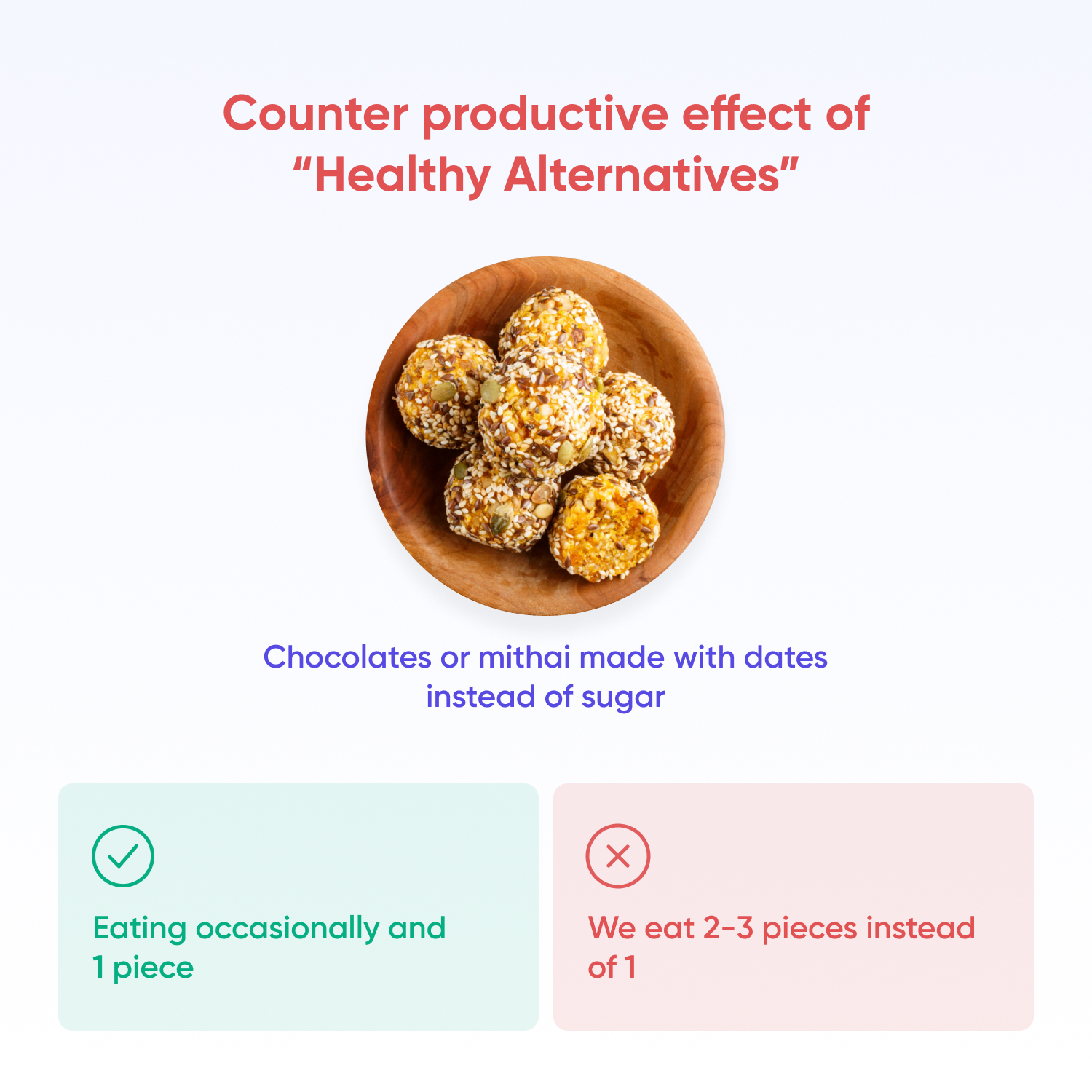
So, if you eat 2–3 date-sweetened ladoos thinking they’re better than one regular ladoo...
You're actually just eating more sugar in a more expensive form.
Let’s Talk Portion Psychology
Regular Mithai
1 piece → indulgence & satisfaction
Clear portion limit
Costs less
Feels like a treat
V/S
“Khajur Wali” Mithai
2-3 pieces → still craving
Halo effect leads to overconsumption
Costs more
Feels like a compromise
It’s a classic health marketing trap:
Perception replaces portion control.
Emotional Needs ≠ Nutritional Needs
Food isn’t just fuel.
Sometimes it’s comfort, memory, celebration, or hormonal reset.
And no matter how many labels you slap on it,
a date-sweetened chocolate just doesn’t feel like indulgence.
So you keep eating more, hoping it eventually delivers the joy it promised.
Spoiler: It won’t.
Bottom Line:
A Regular Bar of Chocolate Once a Week = ✅ Joy + Balance
A “Khajur” Chocolate Thrice a Week = ❌ Overpriced + Unsatisfying + Unnecessary Calories
Let’s stop fooling ourselves.
And let’s definitely stop calling expensive sugar a nutrition upgrade.
What Bon Happetee Does Differently
We power real nutrition intelligence for food-tech, health-tech, and AI companies.
Our food database and APIs are used by:
✅ Health apps
✅ Calorie counters
✅ AI-based food image models
✅ Diet tracking platforms
✅ D2C brands that want real transparency
We don’t just label foods as “healthy” or “unhealthy.”
We give you the actual nutrient breakdown—sugar, calories, macros, fiber, glycemic load, and more—across Indian and global foods.
If You're Building Anything in Nutrition, Ask This:
Are you relying on labels and buzzwords?
Or are you using structured, verified data that reflects how food actually behaves in the body?
If it’s the latter, we should talk.
👉 Explore our API or request access